Learning in the Age of Instant Answers
By Stanley Hayford ·
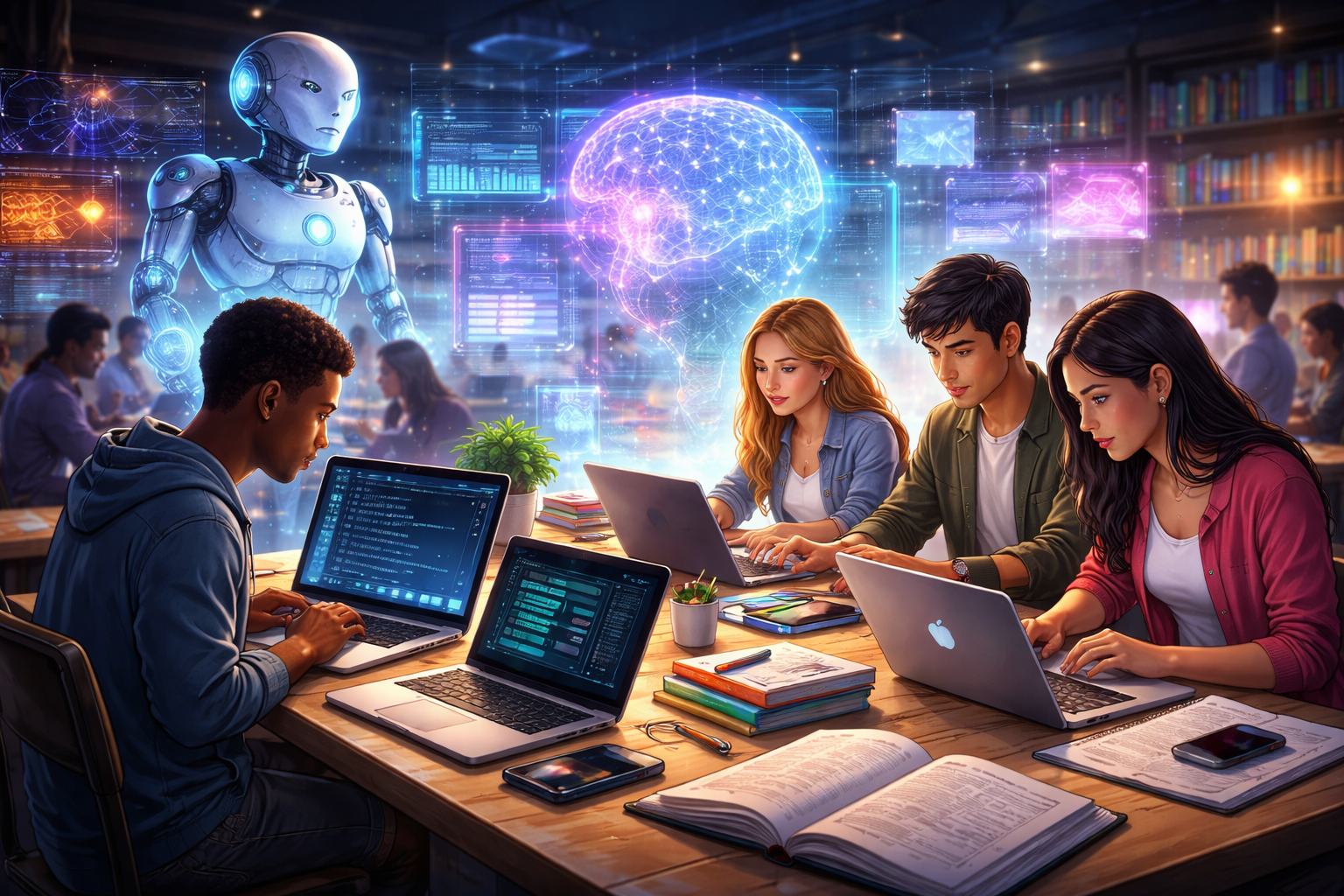
Learning in the Age of Instant Answers
I find myself wondering—how do people even learn anymore?
Not in theory, but in practice.
When information is no longer something you chase, but something that comes to you instantly… what does learning even mean?
How Do People Look for Information Now?
It used to be books. Libraries. Long hours of searching, reading, and thinking.
Now?
You ask. It answers.
Search engines gave us speed. AI gave us completion.
You don’t just find information anymore—you get processed answers, summaries, and even conclusions. The friction is gone. And with it, maybe something else too.
The struggle to understand.
How Do Students Study, Do Homework, or Research?
This is where it gets uncomfortable.
Students no longer just learn. They can generate.
Homework can be completed in minutes. Essays written in seconds. Research summarized instantly. Entire assignments can be outsourced to AI tools without fully understanding a single concept.
So what exactly is being tested?
Is it knowledge? Effort? Or just the ability to prompt correctly?
I Built a Fullstack Project in a Day…
This one really hits.
What used to take months—planning, debugging, failing, learning—can now be done in a day with the right tools.
So what happens to things like final year projects?
What are they measuring now?
If execution is easy, then value must shift somewhere else. Maybe to originality. Maybe to depth. Maybe to understanding.
Or maybe… we haven’t caught up yet.
Has School Become Obsolete?
This is the real question.
The current education system was built for a world where:
- Information was scarce
- Memorization had value
- Access to knowledge was limited
That world no longer exists.
So why are we still optimizing for it?
Why memorize formulas, definitions, or facts when they are always one prompt away?
It’s not that learning is useless—it’s that what we choose to learn might be outdated.
So What Should School Require Now?
If information is abundant, then maybe school should focus on:
- Critical thinking — Can you question what you’re given?
- Problem-solving — Can you apply knowledge, not just recall it?
- Creativity — Can you create something new, not just regenerate?
- Discipline — Can you still do hard things without shortcuts?
- Understanding systems — Not just answers, but how things work
Because knowing how to think might matter more than knowing what to think.
What Should Jobs Require?
Not just output.
Because output is becoming cheap.
Jobs should start valuing:
- Decision-making
- Ownership
- Judgment
- Deep understanding
- The ability to work without over-reliance
Anyone can generate. Not everyone can own.
And What Should We Require of Ourselves?
This might be the most important part.
We have access to tools that can do almost everything for us.
But should we let them?
Maybe the real challenge now is restraint.
To still choose:
- To think before asking
- To struggle before generating
- To understand before shipping
- To learn before depending
Because if we don’t, we risk becoming dependent on tools we don’t fully understand.
The Unknown Unknowns
We are stepping into a world that no generation has experienced before.
We don’t fully understand the consequences yet.
But history tells us something important—we adapt.
We survived wars. Plagues. Revolutions. Massive shifts in how society works.
We are still here.
This is just another transformation. A different kind.
I Don’t Have All the Answers
And maybe that’s the point.
This isn’t a conclusion—it’s a question.
A reflection.
If you have answers, ideas, or even disagreements, write about them. Share them. Challenge them.
Because we are all trying to figure this out in real time.
We are living in the unknown.
And somehow, I believe—we’ll survive this too.
(Though… can’t say the same about the dinosaurs.)
Tags: ai, education, future, learning, technology, reflection, society, critical thinking